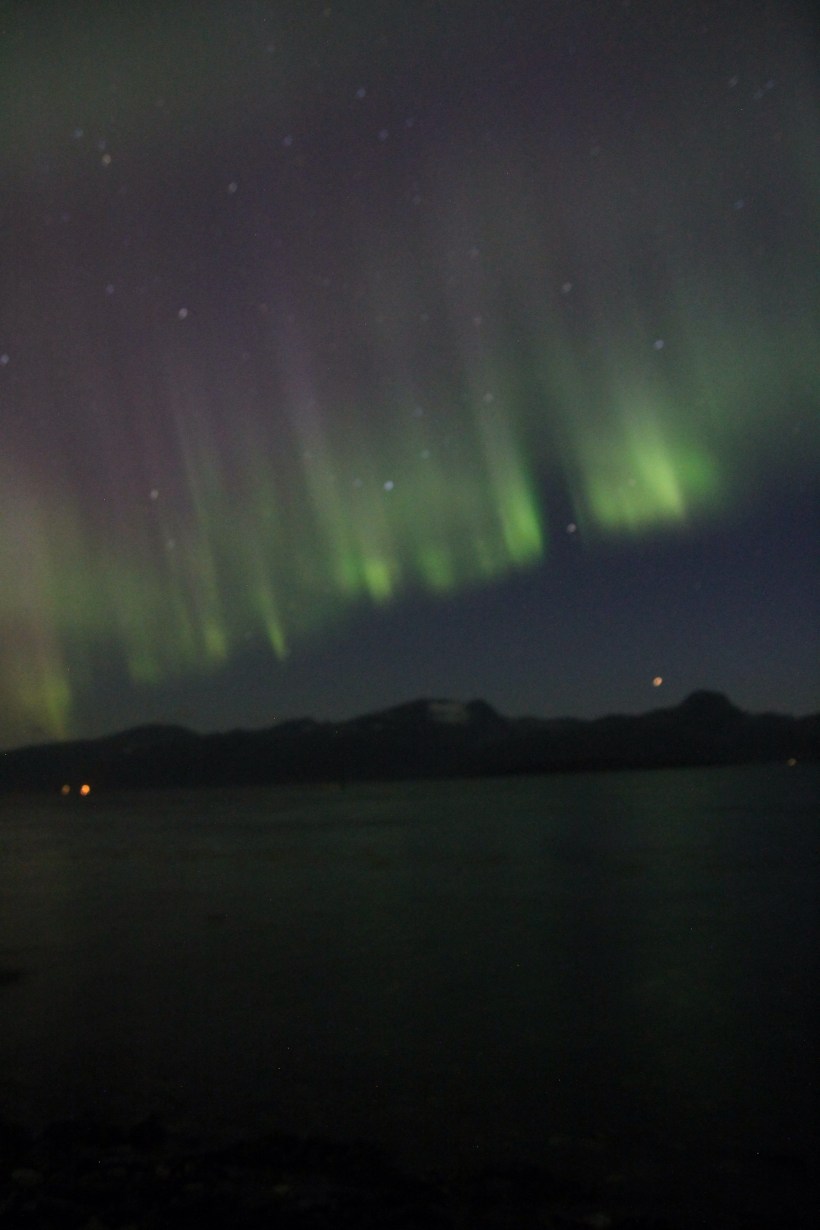
Northern Lights in the Southern Sky.

They started off as no more than a slightly light spot on the horizon. But as we watched, the sky became turbulent with light. Its been raining here for the last week and a half, and we had only seen one sunset, and one Aurora. but when Thursday’s forecast came in positive for clear skies all afternoon, we had to jump at the chance. We started with a dip in the Arctic with our friends.
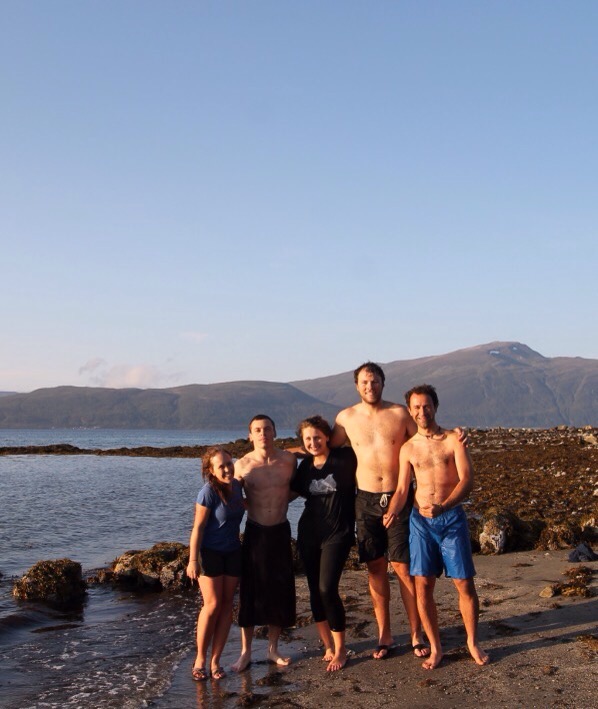

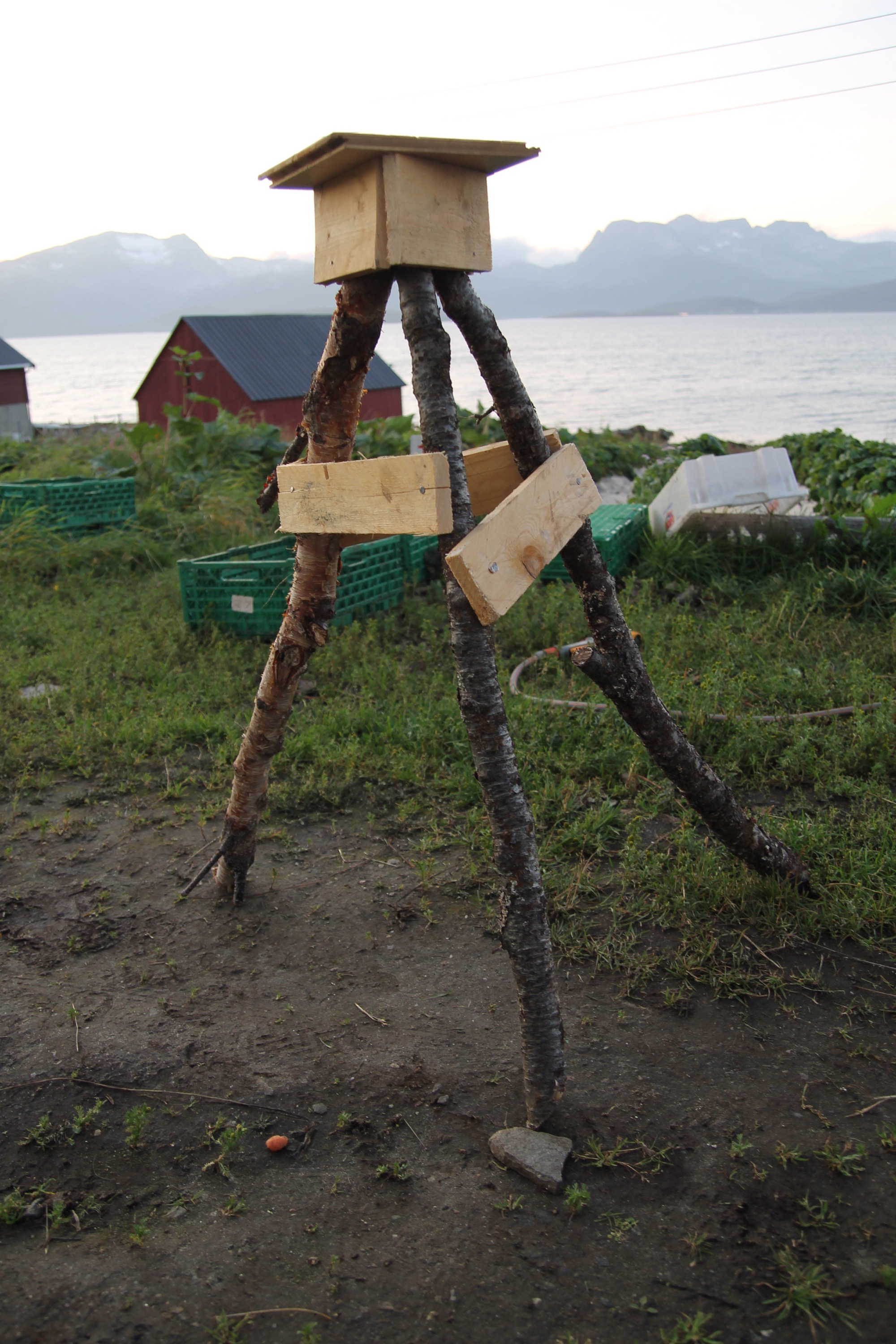
With the water temperature at about 6C, it was pretty freezing, but very refreshing and a great bonding experience (you know, in case living, working, eating, and spending all of our free time together wasn’t enough). Next, Matteo and I completed a project that we had been discussing for a while; building our own tripod, or as Matteo says “Tree-pod”.

After a lot of hand sawing, and shoddy nail pounding, we had constructed a norwegian tripod. We named him Peter after Matteo’s former neighbor who owned a duck.

The lights started off slowly, just little ribbons of light off in the distance, only visible in the southern sky.
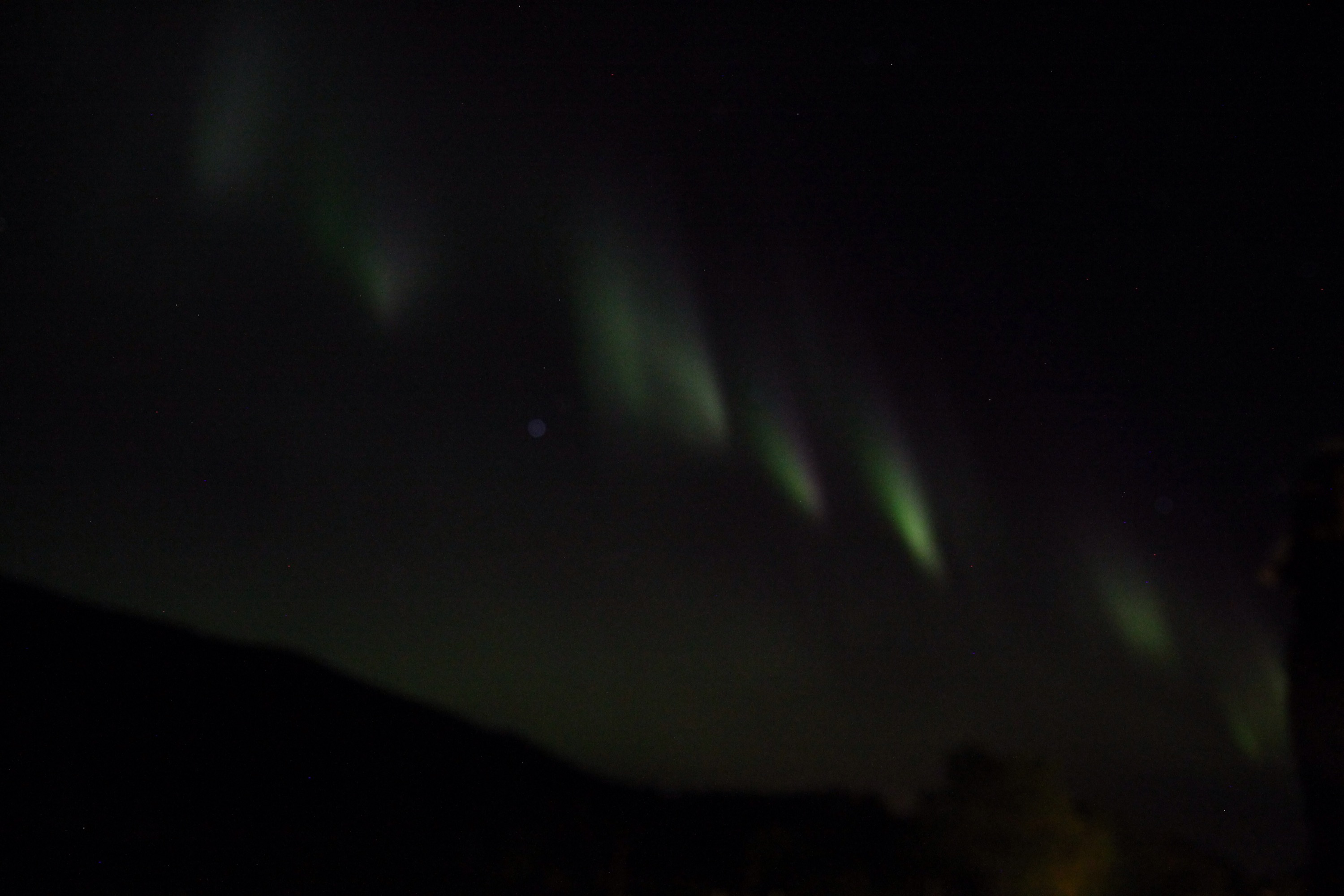
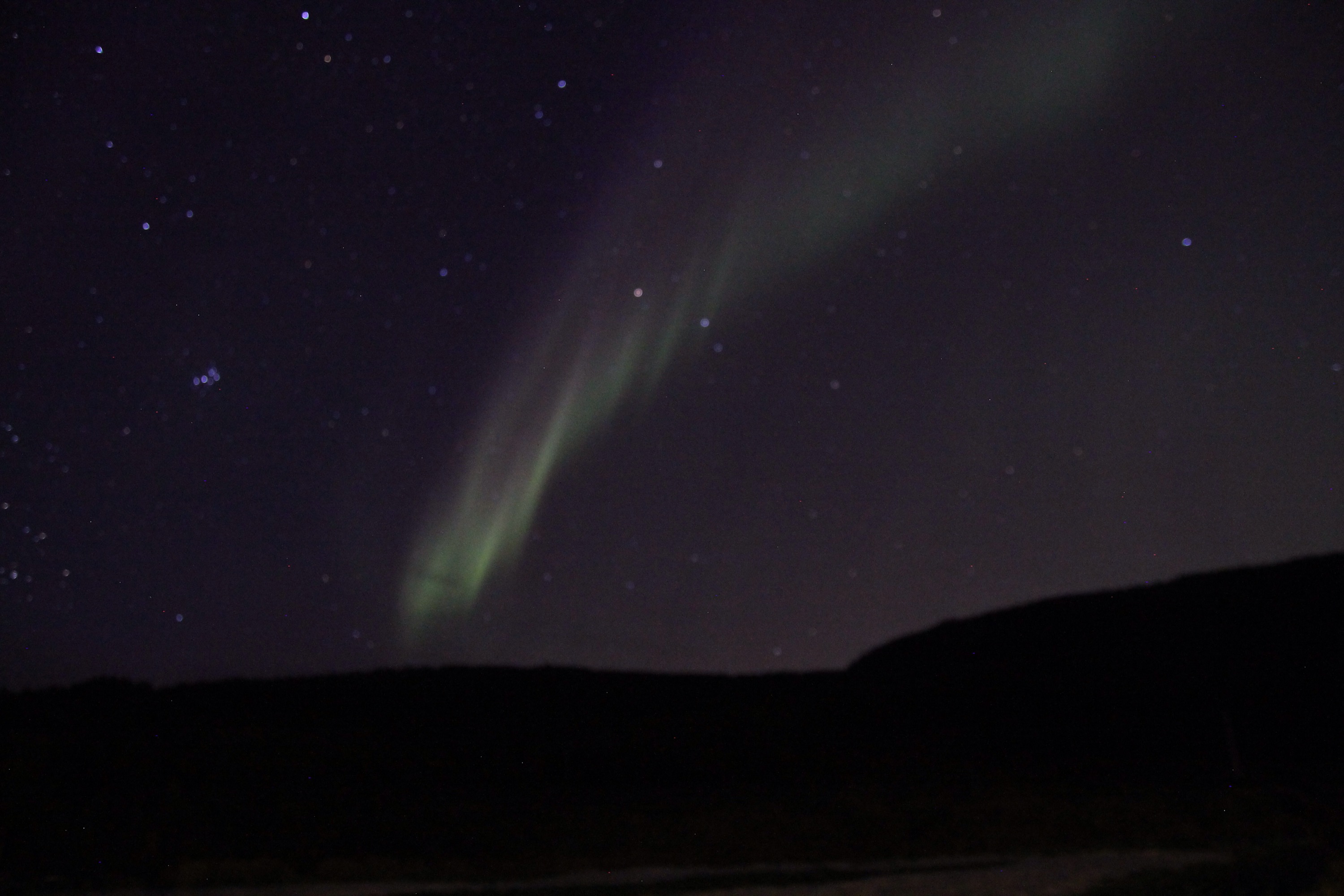
Slowly gaining in intensity and color until the full storm broke out.
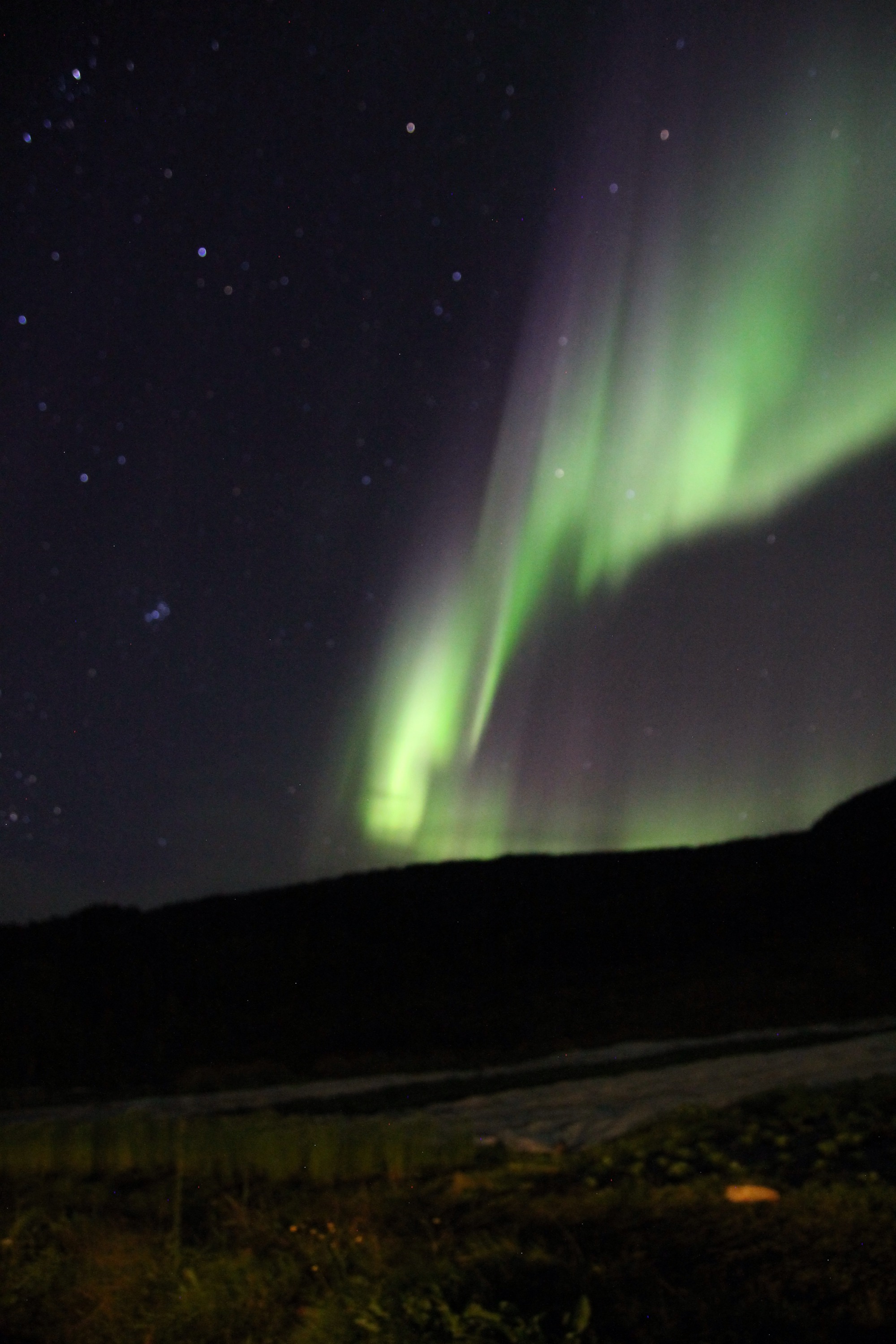



This was right around the time we discovered we could include people in these pictures, and now I think I might have found my life calling as an aurora-portrait photographer.
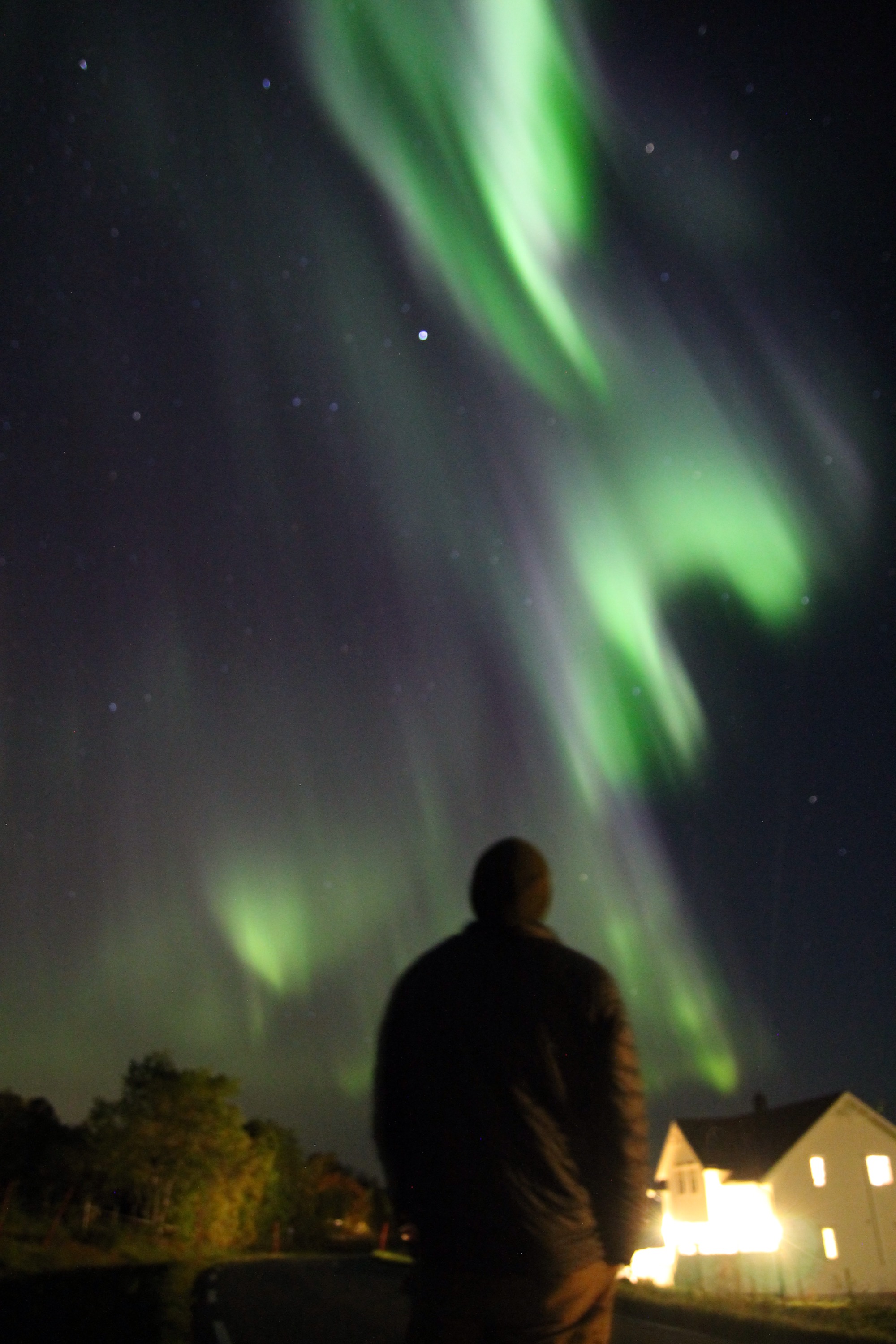

It was one amazing night, and Im really hoping for a lot more!!

Cloudberries.

I’m so happy to have a job that might ask me to hike for my days work. I’m even happier if that hike will include picking Chanterelle mushrooms and Norwegian Cloudberries on a misty moor. The hike was amazing, even with a crazy Arctic storm that blew in right as we were heading home. 

We went up onto the plateau behind the house, of which Roger owns over 5 kilometers. Norway has a really neat law called “All Mans Right”, which means that anyone can go anywhere that there is no fence. So we didnt have any restrictions on where we could go to pick up on the plateau.

  
The view was astounding. Red moss grows everywhere, and lichen covers every rock, so the terrain that would (in Montana or Colorado) be brown is instead an amazing kaleidoscope of colors and textures. The clouds sit low on the mountains right now, as the wind is blowing in from the Arctic ocean. Once on top of the plateau, we started finding the little tiny gems: cloudberries. 

  
Cloudberries are amazingly strong. They grow in an incredibly harsh environment, right on the top of an unprotected plateau, exposed to every type of weather imaginable. Sometimes they even grow out of rocks. They are amazing. They look a little like raspberries, but they are softer and they have a little less sweet taste. Cloudberries grow all over lapland, but they are very difficult to find and pick because of the inhospitable environment in which they grow.

But we found them, and had a great time picking them. They are a great addition to the deliveries which we take into town, as people are always so happy to be able to serve fresh Cloudberries with traditional Norwegian dinners. At the house we make a sauce with the berries and scotch and then put it on ice cream.  On our trip home we were able to see a herd of wild Reindeer which had been grazing on the plateau, but unfortnately it was hail/snow/raining too hard to stand up, let alone tak out my camera. We also found wild blueberries, and a few Reindeer antlers. Plus this view.

  
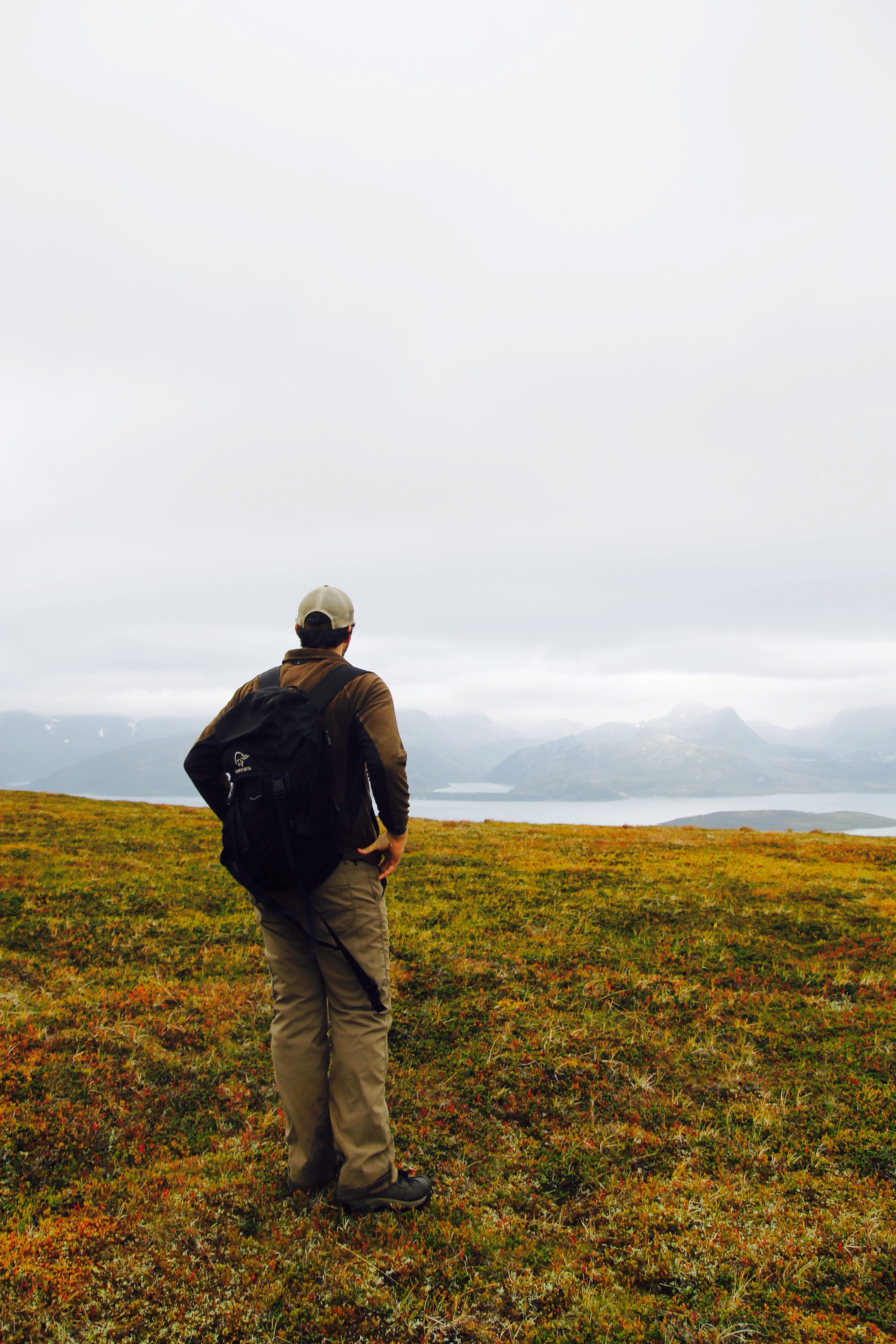
Tyler admiring the view of the fjord from above.

  
Right before the storm hit.


Matteo, Alex, and I trying to hurry out of the storm.

  Reindeer antlers. Were going to mail one home for Siyeh to chew on.   


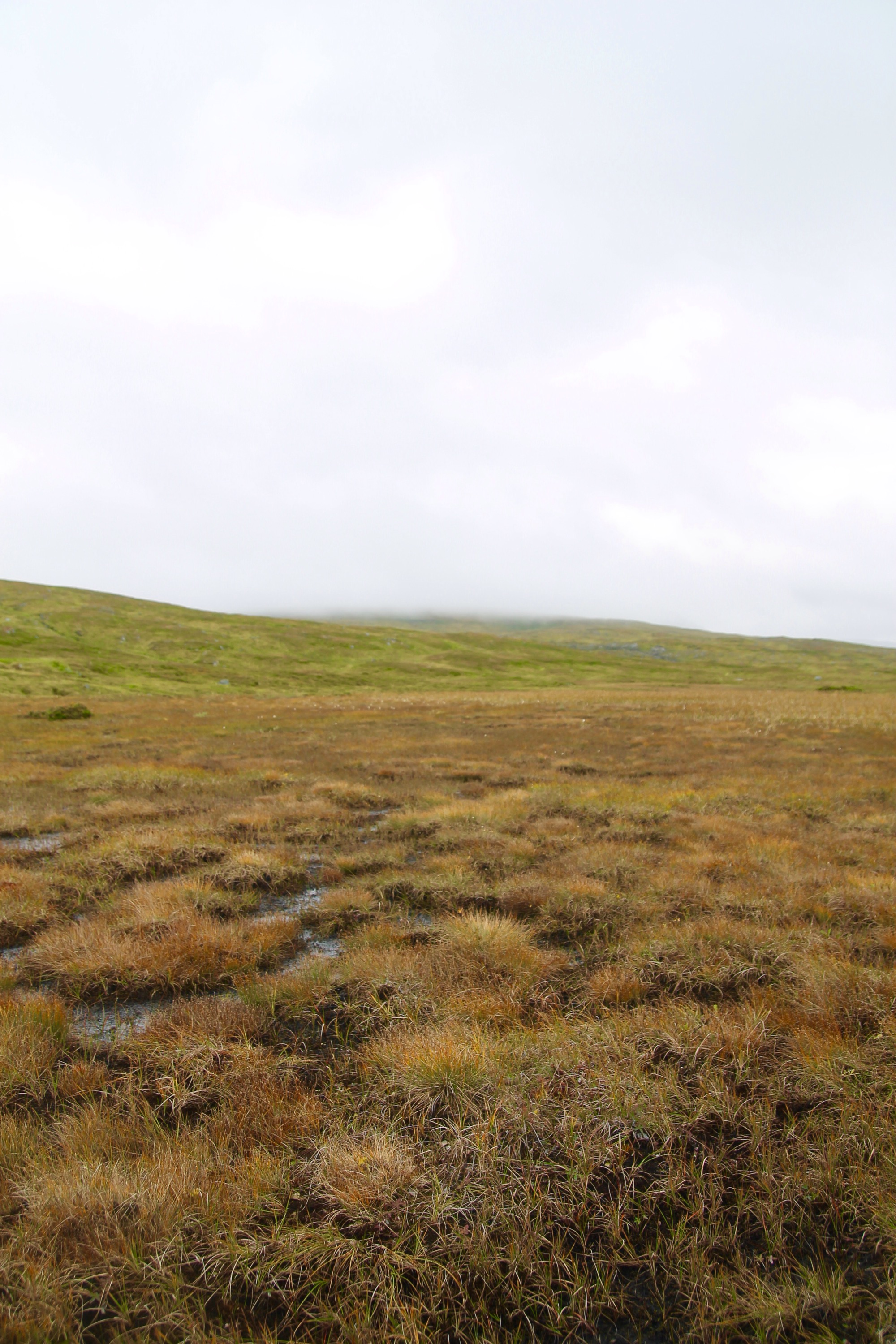
The moor…

A day in Tromsø.

We worked for 8 straight days and finally had a day off, and it was completely worth it. The city is unbelieveably beautiful and quiet, and so distinctly Norwegian. Our first stop was the Arctic Cathedral, which was incredibly lovely. 

  
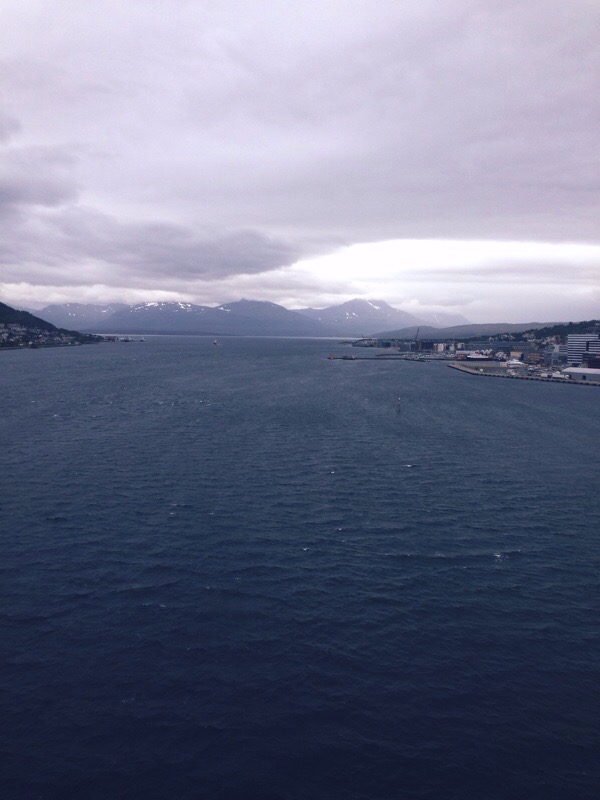
And then a very cold walk across the Atlantic Highway bridge into the city of Tromsø. 

  
It was very very cold, just FYI. 

  
We had a wonderful cup of coffee in the Kaffebønna. And then we visited some shops and got some lunch. When people tell you that Norway is expensive, they mean it, but what they should say is that Norway is expensive if you dont want to spend the time to look around. Or if you dont like bread. We got some sandwiches and visited the Polaria, which is a museum dedicated to life in the Arctic. It focused mainly on the Auroras and climate change, and it was wonderful to learn more about the research being conducted on sea ice and polar bears. (Side note, my favorite Norwegian beer is called Isbjørn, which means polar bear, and it is brewed at the northernmost brewery in the world).


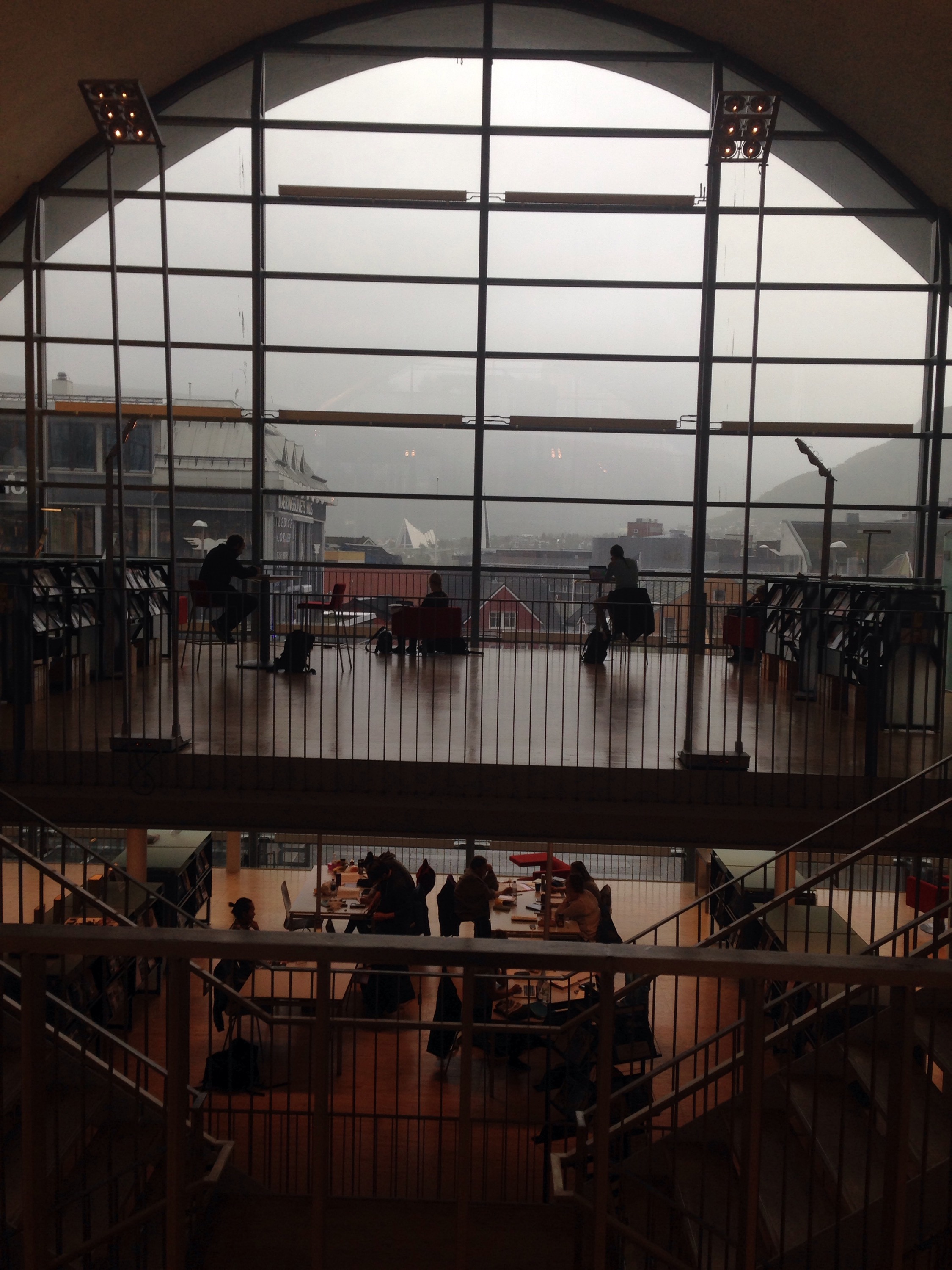
We found a really lovely little shop that sells Norwegian sweaters, and got a pair of slippers and Ty got his wool sweater. We also visited the Tromsø library which had a great view of the city and of the cathedral in the distance. 


We met up with Alex (our very sweet fellow woofer) and caught the bus back to the farm. First day in town was a sucess!

Organic Strawberries.

I don’t know a lot about how ordinary strawberries are harvested, but I can tell you a great deal about how ours are done. This will be a soap-box post, so if you’re resolutely not going to ever buy anything organic, don’t feel like you have to keep reading; these are just my reasons.

 I will never again buy ordinary strawberries, and yes, I do know how completely ridiculous that sounds. But once you see the amount of love that goes into every single one of the Strawberries on an organic farm, you cant go back. So I’ll tell you a bit about them.

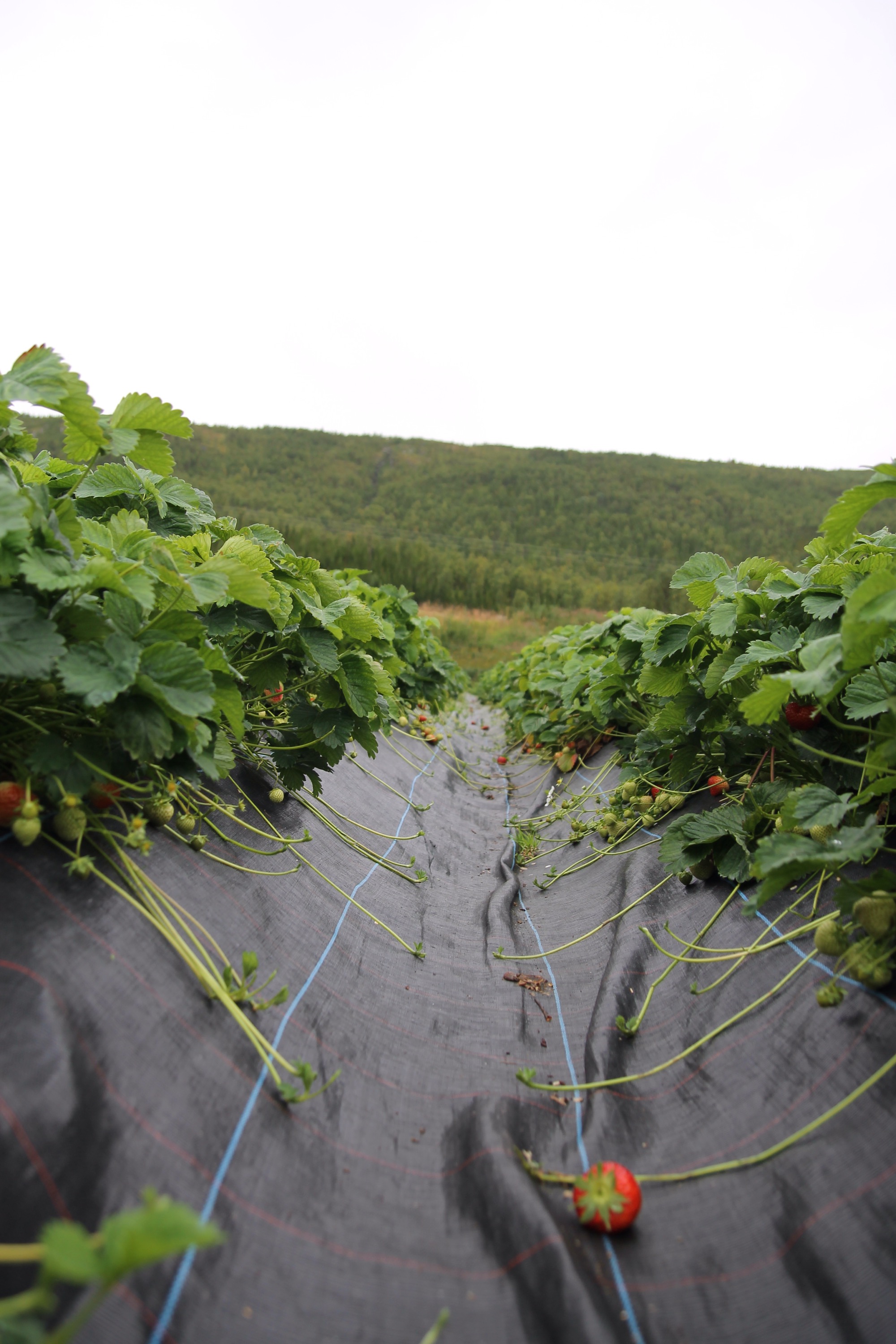
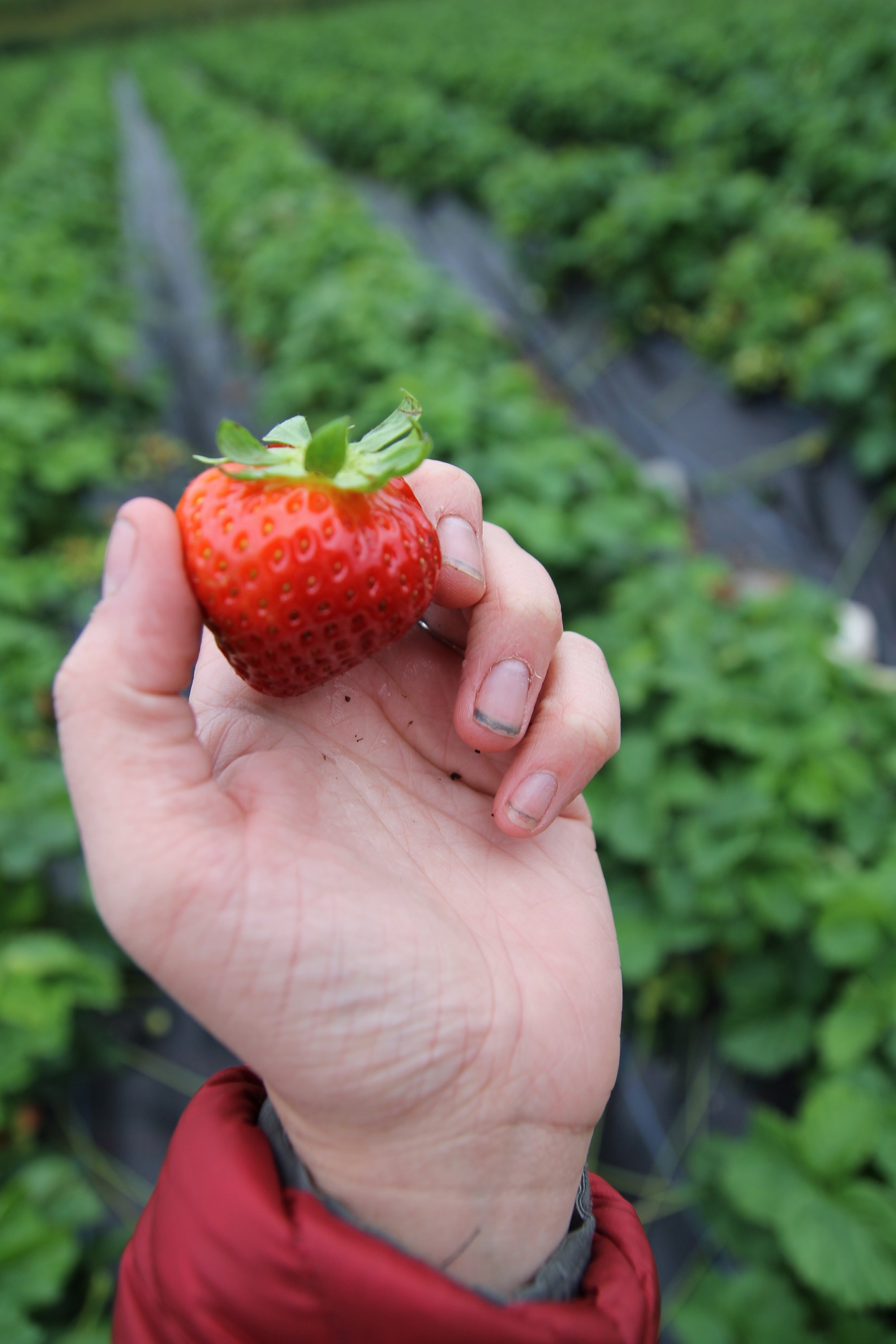
First, the field-making process of Strawberries is incredibly labor-intensive. It all must be done by hand, and it is extremely difficult and precise work. Once the plants grow and begin to produce berries, the really time-consuming part begins. Each plant is cared for individually, and each berry is picked by hand. The best berries are the ones that are not quite at peak ripeness, meaning that they still have some orangy color, but no white on them at all. 

You must remove the stems, but be careful not to remove the green leaves which make the Strawberries pretty (Its ok if you accidentally pick the green part off, you can eat that one… and that one over there because its staring at you). The Nyorsk word for Strawberry is Jorbær. 

Then, because it always rains in Norway, you have to take the berries (which are never ever stacked in boxes) inside to dry. To do this, we line little crates with toilet paper, and pour no more than 400 grams (thats right, I know metric now) of Strawberries into the crate and roll them around to dry them off, Then they are poured into bigger crates lined in toilet paper and dried again. 

  
Next, each berry must be sorted. Some are too ripe, those come into the farmhouse where we live and they live by the window until they are ready. Some are too ripe or have their green bits removed and they either become our dessert or they are made into jam. Some are absolutely perfect, and those little individually selected beauties get weighed and boxed and sold to several stores and restaurants in Tromsø, where people will never know or appreciate how much love that little Jorbær received. 

And I have the amazing pleasure of getting to do all of this. And that, friends, is why I will never again buy anything but organic Strawberries ever again. 

How to make a Strawberry field. 

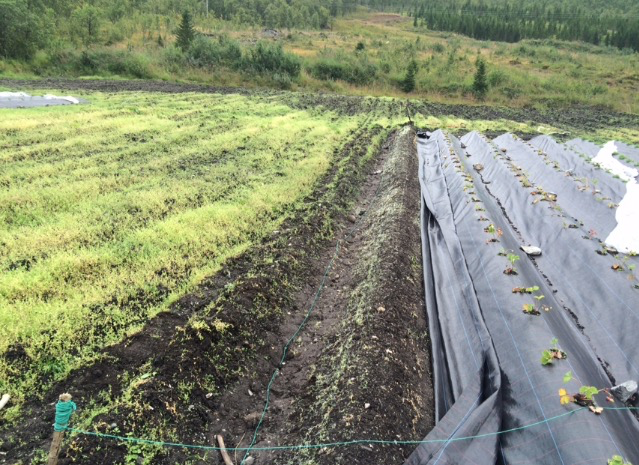
Strawberries are a little bit like weeds, they will grow absolutely anywhere, and they are very difficult to tame. But tame them we do! Heres how it works. Begin with an empty field like such:


The field must then be set into perfectly straight rows about 18 inches in height, and about 2 feet apart. This takes an enormous amount of manual labor. Next, a layer of thick black membrane is placed over the top of the rows so that the ground is protected, both from the elements above and from the growth of water weed below. This is difficult because the membrane is heavy and difficult to manuver, and because it has to be placed very precisely so that the plants can be placed in the right spots. Then rocks must be added to ensure that the spacing is correct, and the ends of the membrane have to be buried so that they arent in the way. 


Next, you have to burn 6-inch holes in the membrane with a blowtorch, but be careful not to burn down the whole field. Side note, this is nearly impossible to do while it is raining. Once the holes are made, you must dig 4 inch deep holes in each of the membrane holes and then fill it with fertilizer. 

Pause for a note about fertilizer. We are on an organic farm in Arctic Norway, there will be no use of miracle grow here. Our fertilizer is made from a 50-50 mixture of black soil and sheep shit. I don’t mean to be crass, but sheep shit is the actual farming term for it, and I refuse to compromise on the basics of farming. You then must add water and stir the sheep-shit-concoction until it is the consistancy of mushy clam chowder. 

You simply fill each hole you have made with the sheep shit mix and then make a hole with your hand, place the strawberry plant in it (roots down, in case you didnt know), and fill in the rest with dirt.

That’s about it! In the end, the field looks like this, and its a beautiful sight. 


Life at 70 degrees North.

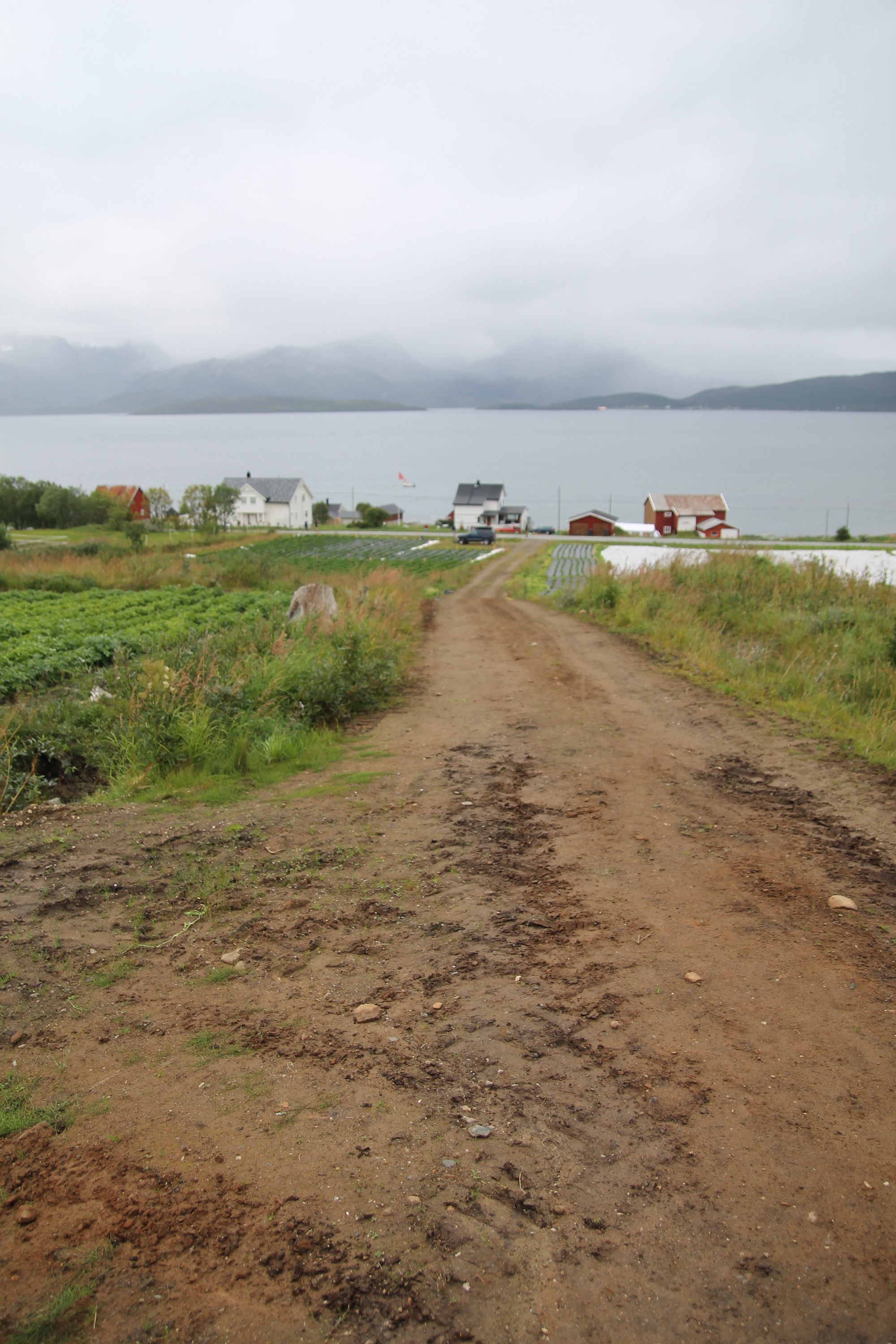
It’s amazing here. Beyond amazing, whatever that may be. Cold air blowing in off of the Arctic ocean, warm sun on your back, wet leaves and dirt sticking to absolutely anything, and Strawberries. Because Norwegian Strawberries need to be capitalized. They are huge, beautiful, and sweet.

  
Today was our first full day on the farm, but we started work as soon as we got in yesterday. After catching the bus from Tromsø we were overwhelmed with life on the farm. The work is back-breakingly difficult, as we expected, but much to our surprise we found that we not only enjoy it, we fit in here.

The people who are staying here with us are kind-hearted and they love to travel and experience life. They love to talk and share experience life. Alex is from Georgia (the state, not the Republic of), Jremey is from France, Matteio is from Italy, Moncia is from Spain, and Carolyn is from Austrailia. Its been so fun to see how much we have in common, even though it seems counter-intuitive. Our host, Roger, is a delight. He loves cooking, and prefers to do so while blaring a rather remarkably ecclectic mix of music, from Simon an Garfunkel to French opera. I couldnt belive how at home I felt last night, just sitting around the table laughing with everyone. 

Our day is very full right now, as the harvesting season is the most important time for the farm. The strawberries ripen quickly and its important that we get them picked as quickly as possible. These berries recieve an incredible amount of love, a process which I will explain more fully in the next few days. but know that when you buy organic strawberries, those babies have had a LOT of attention.  


Thoughts from the window.

We made it to Oslo! Here are some of our first experiences as new Norwegians. 

  
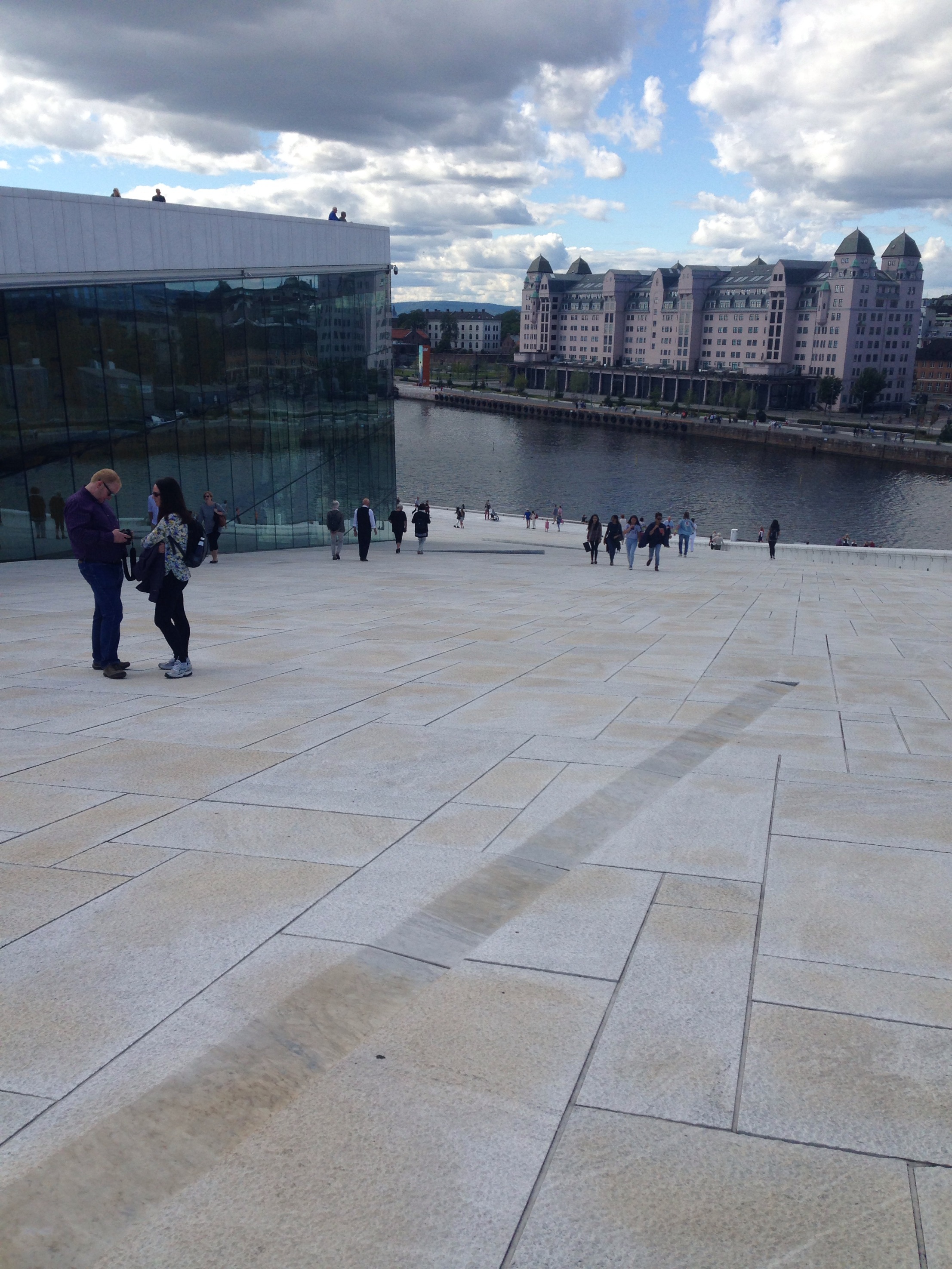
Our first hike in Norway was to the top of the Oslo opera house. Here we noticed a distinct difference between Norwegian culture and American culture. For one; we almost fell down a lot because the dips in the marble covering the roof are not marked. We agreed that this is because if, by some crazy chance, someone in America would let you climb their building, they would surely mark any danger spots for fear of being sued. This would be a horrible distraction from the beauty of the Oslo Opera house. From the top we saw two towers and decided to investigate.

  
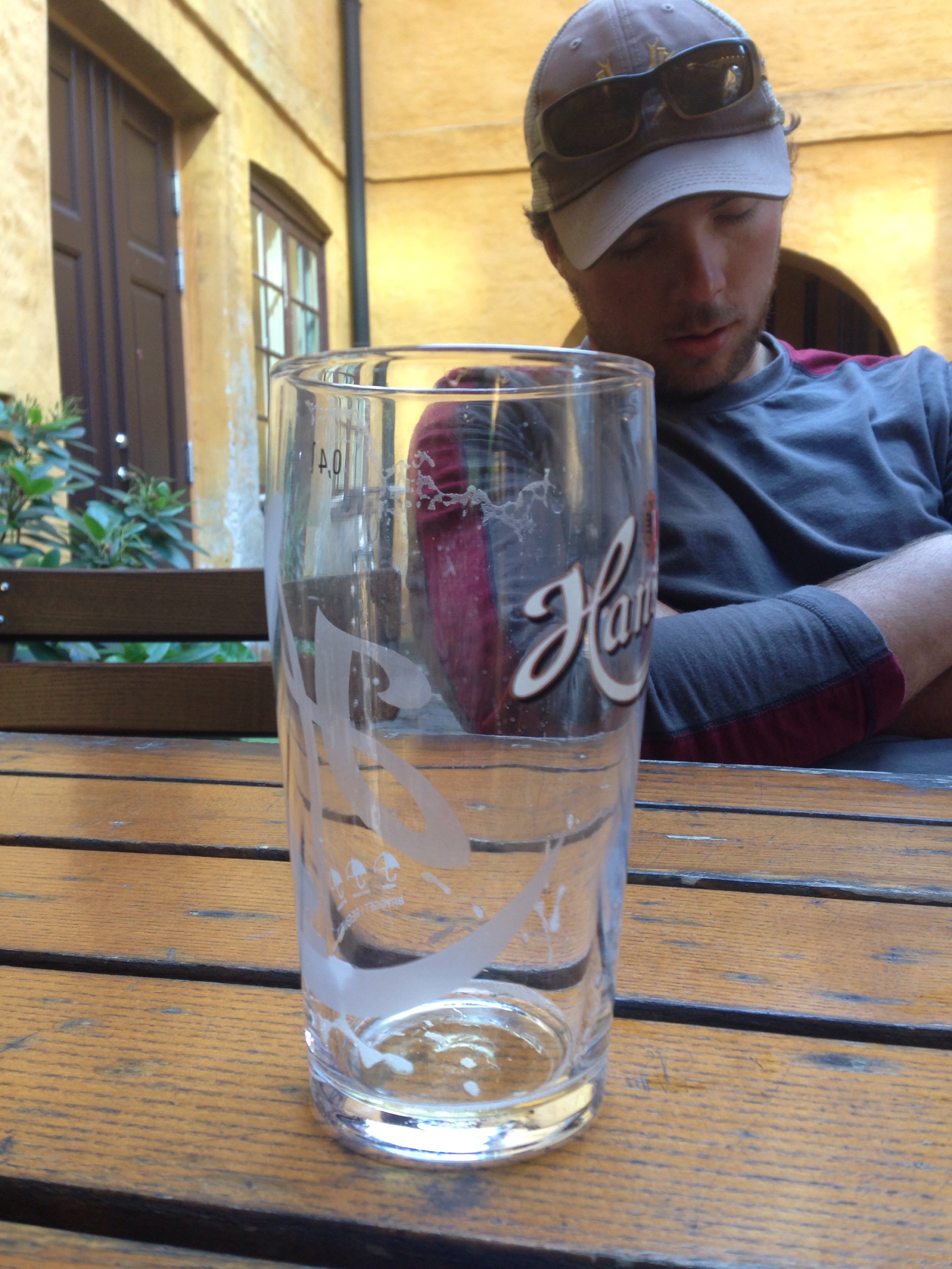
They turned out to belong to a castle (Akershus castle). We were able to explore the castle grounds for free, and it was lovely. We then found cheap sandwiches, and tried to stay awake for the walk back to the hostle. But then we found the most lovely and inviting patio, and stopped for a quick drink. Tyler barely made it through his beer before he fell asleep.  

 
We’re excited for day three of traveling, and we are hoping to be settled on the farm by this time tomorrow! 

On our flight.

Well, it’s official. Were on our way to Norway! Current feelings: nervous, excited, scared, confident, and happy.  
We are flying into Amsterdam and tomorrow morning we will be in Oslo. We will spend one day in Oslo, and then catch our flight up north to Tromsø, where start work September 1st. 

We can’t wait to share our journey with you!

The top ten questions you hear when you tell people you’re moving to Norway.

When you tell someone you are moving to Norway, they have an understandably long list of questions. Here are the top ten we have heard, along with the answers.

10. Why are you doing that?

Because we can and why not?

9. What are you doing with your dog while you’re gone?

He’s staying with Tyler’s parents in Denver. It’s ok, he loves them so much and he will be happy there.

8. Aren’t you going to miss him?

Yes. Oh my God yes. How could you not miss this sweet little man? Sometimes I think I would do better without one of my limbs than without Siyeh. My world basically revolves around him, and I’m not being sarcastic.

TnL-215-filter

7. What are you going to do there?

We are going to be working on an organic strawberry farm outside of Tromsø. Tromsø is located 217 miles north of the Arctic Circle, on an island in the county of Troms.

6. Strawberries grow in Norway?

Yes they do, 15 different types in fact! Tromsø enjoys 2 months of polar summer, meaning that the sun does not set for almost two months. The temperature in Northern Norway during the summer averages around 60 degrees. This means that the strawberries have tons of sunlight, but no withering heat. Here is the farm where we will be working.

394641_342135409197132_404358288_n

5. Really, why Norway? 

A lot of reasons, actually. Mainly, we knew we wanted to go abroad for a year, and we knew we wanted to be able to work. We both love skiing and hiking and fishing. Tyler’s family is Norwegian, and we knew that it would be particularly wonderful for his Grandmother Phyllis if we went to Norway and were able to bring back some memories for her.

Also, I think this picture is enough of a reason by itself.

c61ada9555457270ca6e708139b481af

4. Do you like salmon/lefse/lutefisk?

Yes/Yes/Probably not, but I’m going to try it anyway.

3.  Do you like cold weather?

Yes, but its not actually as cold as you might think. Of course it is 200 miles north of the arctic circle, at about 70 degrees north, so it will be chilly. But it doesn’t experience the bitter cold due to the Norwegian current that runs right up the coast.

2.  How long will you be gone? 

We are hoping to be gone about a year, but there is always a chance that something will change that plan. Norway is a very expensive country, and we really like beer. We have a one-way ticket, so I guess we’ll see!

  1. Did you know that I’m Norwegian?

No.

Now Is The Right Time.

image

Today was a tearful day. I went to work to say goodbye to my sweet lovely customers and friends, while my husband loaded our u-haul.

Little moments throughout the day brought  on the realization that by the end of this day, Missoula would no longer be home. Or, at least my dog and most of my things would no longer be there, and home is where Siyeh is.

Of course today was hard; I knew I would cry. What I hadn’t expected were the incredibly sweet moments that brought on fresh waves of tears. Hugs from my dear friends, cards from so many people, wine, chocolate, and flowers. And words. Sweet words that carried appreciation and love from people all around me. It was overwhelming, and overwhelmingly sweet.

I feel like my heart broke a million times today. And when we left town, Denver bound, I decided to open all of my cards and start the tears again just so I could get them all out. Again I was swept up in a current of love, and I’ve never felt so loved and yet so sad at the same time. But there on top of my card pile is the exact thing I needed to hear. Now is the right time.

Thank you missoula. We won’t be away from you forever, though this chapter of our lives is closed for now. It’s the right time to say our bittersweet farewell, and know that we loved deeply and were loved deeply in return.

-Sapling